
Beautiful, decorative, and versatile. Those are the three words We choose to define damask fabric. Damask was a luxury fabric and very hard to weave on manual draw looms. With technological advancements, it became industrial product, one of the common decorative fabrics in modern times. However, luxury damask fabrics are still adorable & marketed.
We are Team Muslin Dhaka. A group of fashion lovers & textile experts offering the most expensive fabrics such as Dhaka muslin. We also curate most luxurious fibers and fashion. With more than 50 years of cumulative experience in luxury textile, we are sharing our wisdom about damask fabric.
Let’s begin with the essentials.
What is Damask Fabric?
Damask is an ornamental fabric woven in a jacquard loom. Different textile materials may be used to weave damask. But traditionally, silk damask is the signature textile for damask fabric.
It is reversible. That means damask is reversible, with no distinct face or back. The woven patterns that are woven in the damask are part of the fabric. They are not embodied or printed separately.
The basic weave of Damask can be plain, twill, or satin weave. The pattern emerges through contrasts in weave structure, often between satin and matte surfaces. The detailed leaf motifs and floral designs are typically created with a weft-faced sateen or matte weave to provide contrast.
“Then, as now, damask was a byword for magnificence and luxury. This textile was first woven in China around 300 BCE and was reserved for nobility and royalty.”
Kassia St Clair, Editorial Team at ELLE Decoration UK (Design Historians)
Let’s go through a quick highlight, so you get a quick understanding of the fabric.
At a Glance :
|
Industrial Name |
Damask Fabric / Damask Jacquard |
|
Origin |
China (Tang dynasty) |
|
Other Names |
Silk damask, wool damask, cotton damask, Damask Irish Linen |
|
Construction |
Constructed with two types of weaving. Basic weaving creates fabric while sateen weave creates design. |
|
Weight |
Depends on the textile fiber. It can be 150 to 350 GSM. |
|
Color |
Depends on the fabric materials. |
|
Airflow |
Moderately breathable. Usually depends on the fabric. |
|
Moisture Absorbance |
Moderate. |
|
Weaving |
Plain, twill, or satin. |
|
Stretch |
Usually, no. |
|
Heat Insulation |
Depends on the material. Silk insulates less while wool naturally insulates more. |
|
Shrinkage Ratio |
Cotton ones can shrink a bit. |
|
Usage |
Clothing, accessories, decoration, and upholstery. |

What is the history of Damask Fabric?
First thing first, keep in mind that damask is basically a weaving technique. It is a technique of creating patterns and designs in the fabric. The fabric made of damask weaving ( updated from traditional weaving) is known as damask fabric.
Now, let’s dive into history.
Origin
The name damask fabric is found in the history around the 1400s in France. But the name came from the Syrian city of Damascus. It was an important part of the Silk Road.
For a long time, China produced the fabric and supplied it around the world. The Silk Road and different ports were used to trade the fabric. Damascus was the major port for shipping the fabric.

Ancient time
But the history of the name is not certainly the history of the fabric, right? The first trace of similar fabric was found about 2400 years ago in China. However, experts predict the technique is more likely to be at least another thousand years older.
Middle-age
Damask fabric was first imported in Europe in the early Middle Ages. Even then, the production of the fabric was tiringly slow. With its slow process and unique beauty, it was one of the most expensive fabrics at that time.
Modern era
After the Industrial Revolution, several factors changed the availability and cost of damask fabric. Firstly, the invention of the jacquard loom made it possible to automate the damask weaving process. So, mass production became possible.
Computerized jacquard looms can create fabric with very complicated patterns and designs. The process also takes a very short time. As the production increased, the price dropped significantly.
Different synthetic materials also became available everywhere. People invented different types and quality of damask with cheaper materials.
Industrial production eventually made damask accessible beyond aristocratic households.

How is Damask Fabric fabric made?
Let’s discuss the procedures of making damask fabric below.
Materials
Silk is mainly used to make traditional luxury damask fabric. Silk damask is smooth, soft, and beautiful.
At first, silk was the only material for the fabric. However, after the Industrial Revolution, people started using cotton, linen, and wool to create the fabric.
Synthetic fibers like rayon and polyester are also used to make this fabric. Synthetic damask is more common & cheaper.
Weaving
Damask fabric is made by combining two types of weaving. Plain weave, satin weave, or twill weave is used to make the fabric. While sateen weave creates the aesthetic designs.
- Handloom: Creating damask with handloom is very slow and complicated. Today, handmade damask fabric is quite rare. It is considered luxury & expensive.
- Jacquard loom: In jacquard loom, damask fabric is made with computerized automatic weaving. The process allows us to make more accurate and complicated designs very easily.
Finishing
Some modern upholstery damasks receive a Performance Finish to enhance stain resistance. For commercial use, they may also be treated to be Flame Retardant or IMO Certified for maritime use.
What are the types of Damask fabric?
There are more than a dozen types of damask fabric. Let’s talk about the common types below.
Silk Damask
Also known as ‘true damask,’ silk damask is the most beautiful and quality variant of the fabric. Silk damask is more sustainable. It comes with unique features, aesthetics, and beauty. Looking for the best type of damask fabric? Go for silk ones, without a doubt.
Wool Damask
Wool damask is also sustainable, but it’s not as beautiful as silk ones. It is thick and works great for making sweaters, coats, and jackets.
Cotton Damask
Among the natural damask, cotton ones are less sustainable. Nowadays, cotton damask is quite common. It suits more for upholstery, and household fabric like table cloth, furniture covers, etc.
Synthetic Damask
Synthetic damask is made from polyester, rayon, and other synthetic fibers. They look nice and last long with little care. However, they are not the best for the environment.
Twill Damask
Twill damask fabric is made with twill weave. It is quite different from regular damask. It’s more compact, durable, and less breathable.
What are the Characteristics of Damask Fabric?
The features and characteristics of damask fabric vary slightly depending on the material and weaving. Generally, silk is soft and delicate, while cotton and wool damask are thick and a bit rigid.
To give you a better idea of the fabric, we collected one cotton damask sample. We did several experiments with the fabric and shared the results with you.
Let’s discuss the basic characteristics of damask below.
Appearance
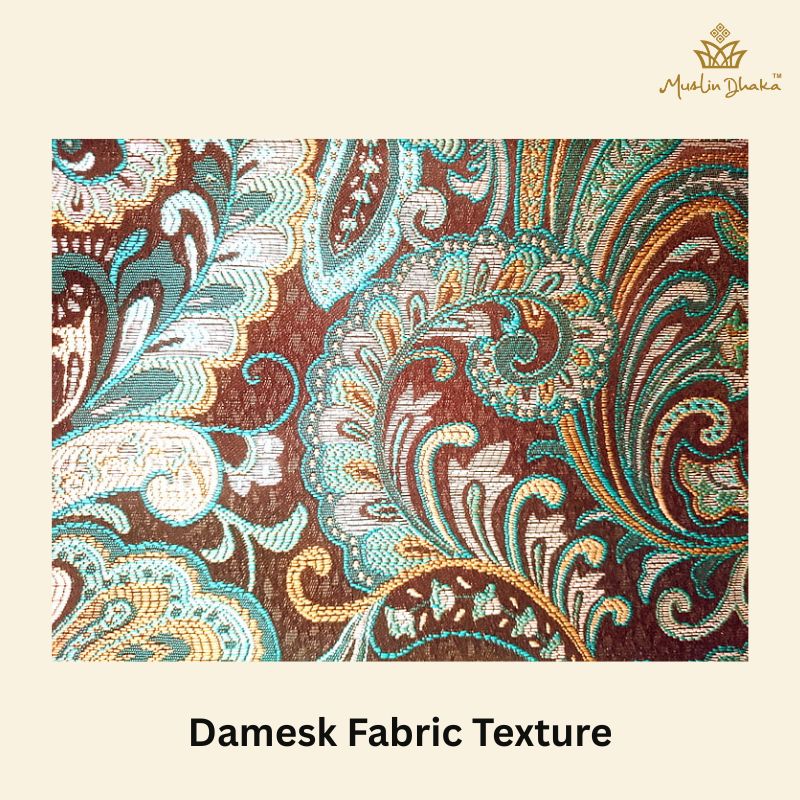
Damask fabric comes with beautiful flowers, leaves, patterns, and designs. Although the design is part of the fabric, it blends perfectly. The color of the fabric and the design plays a major role in how nice a damask fabric will look. Silk Damask looks naturally more elegant.
Softness
Except for the silk damask and some artificial ones, it is a bit rigid and not that soft. It is thick and a bit stiff. This is why most damask fabric is suitable for accessories and clothes like coats, handbags, hats, etc.
Yarn quality
The quality of the fabric depends a lot on the quality of the yarn. Our sample had great quality cotton yarn.
Breathability
Regular damask is made with plain or satin weave. That’s why they are quite breathable, even with a medium to high thickness. However, the twill damask has low breathability.
Heat absorption
The heat absorption of this fabric depends a lot on the materials. Silk and cotton absorb medium heat. At the same time, wool is more likely to absorb heat and retain warmth.
Stretch
Some of the artificial damasks may have a bit of stretch. But regular natural damask does not stretch. We tried to pull our sample and observed no stretch. This is natural for cotton damask.
Water absorption
Again, water absorption depends on the material. Cotton damask has the highest absorbability. Silk and wool are naturally less absorbent.
Transparency
Generally, damask fabric is non-transparent. It does not have any sheer character. However, because of silk damask’s delicate nature, it does pass more light than others.
Shrinkage
Cotton damask can shrink 2-3 percent with time. Other types of damask are less likely to shrink with proper care.
Durability
The damask fabric has excellent durability. Its compact weave creates strong bonds, which make the fabric long-lasting. With extra care, you can expect quality damask fabric for more than a decade.
We tested our sample with a simple knife stroke test. After several light knife strokes, there was no sign of a cut or a scratch.
Color retention
This fabric usually holds the color very well. Again, it depends more on the material, dye, or construction.
Damask Fabric and Sustainability
At first glance, it’s hard to determine the environmental impact of damask fabric. This is because it’s more of a weaving than a fabric. However, if we consider each factor, the fabric is moderately sustainable. But it can gain high sustainability if we use it consciously.
This fabric has quite a high durability. Using the fabric for a long time makes it more sustainable for the environment. Silk and linen are generally the better options. Cotton is not that sustainable as it requires a lot of water. But overall, any natural damask is safer for the environment than synthetic damask fabric.
The actual environmental impact of a fabric is far more complicated. We need to consider fertilizer usage, chemical use, production processes, waste management, and many other factors. But a quick hack is to get certified organic damask fabric. Organic fabrics are made in the most sustainable ways.
What are the uses of Damask Fabric?
Damask excels in versatility. Let’s find out the uses of damask fabric :
- Clothes: The fashion industry loves the ornamental characteristics of damask. Jackets, coats, uniforms, and wedding dresses are made of this distinguished textile. As it is thick and a bit stiff, it is not ideal for many types of cloth. Making heavier clothing items is good with Damask.
- Upholstery: These fabrics are used as furniture covers, table linen, podding, and other upholstery items.
- Home decor: Damask fabric works perfectly as home decor items such as curtains, tablecloths, and wall hangings.
- Accessories: Its unique beauty and thickness make it a good pick for different accessories. Earrings, handbags, hats, and shoes are made with damask fabric.
What are the Benefits and Drawbacks of Damask Textile?
Let’s glide through the pros and cons of damask fabric below.
Advantages
- Nice designs.
- Have plenty of designs & patterns.
- Smooth texture.
- Quite durable.
- Versatile for many uses.
- Easy maintenance.
Disadvantages
- Prone to abrasion.
- Thick and stiff.
- Not suitable for regular clothes
- Hard to work with or DIY.
Damask Fabric vs Brocade Fabric
Damask and brocade fabrics look kind of alike. But they have some major differences. The Damask is plain and feels nice to touch. Brocade is a rougher texture.
The design of the damask is woven into the fabric. On the other hand, brocade fabric has embroidered and bit-raised designs. Brocade is considered more luxurious than damask. please read luxurious brocade fabric 101 to know more.
How to Care for Damask Fabric?
It’s not difficult to care about Damask. It is a durable fabric that is less prone to damage. Here are some expert tips for you :
- Damask fabric can be machine-washed.
- Use warm to normal temperature water.
- Do not use hard detergent.
- Hot water might cause unwanted shrinkage.
- Do not dry the damask in the sun directly. It might harm the color. Especially makes the white color yellowish.
Note: There are different types of damask. Follow the user manual for maintaining the fabric.

Damask Fabric by the Yard
You can find damask by the yard at different prices. Damask is available across a wide range of qualities, from practical everyday grades to luxury woven productions.
For the standard quality Damask, you need to pay 10 to 50 USD. Below, the cheaper option might not be viable for you. Premium damask commands significantly higher prices.
Where Can You Buy Damask Fabric?
Damask fabric is available both online and offline. If you want to touch and feel before buying, you can visit a famous fabric shop nearby. If you are like us, love to order online, Joann, Etsy & Amazon are the best options. Etsy is famous for luxury Damask fabric & DIY projects.
Our recommended 5 best damask Brands are :
- Parmatex Textiles – Best overall
- Faggianis Damask – Most Luxurious
- Rudong M – Best affordable
- Elrene Store – Best for home decor
- Classic Modern Fabric – Best value for money
You can order them from Amazon.
FAQ
Is Damask still in style?
Yes, damask is very trendy in the fashion industry with its timeless beauty. It’s less likely to go out of style anytime soon.
What is the difference between damask and jacquard?
Damask fabric is made on a jacquard loom. Damask is the result of weaving, while a jacquard loom is the device of weaving. Other fabrics, like brocade, can be made on a jacquard loom.
Does damask shrink?
Generally, damask fabric is less prone to shrinking. However, if you use too hot water to wash, you may experience shrinkage.
Conclusion
Damask fabric may not be as classy as it once was. But still, it shines with its simplistic beauty. If you are looking to buy a durable ornamental fabric that will last for years, damask is one of the top-tier options.
Check the best damask on Etsy!

