
Muslin Dhaka Handwoven Cervelt Signature Shawl
5,000.00$
A handwoven Cervelt shawl, 39 inches square.
13-micron winter down of the New Zealand red deer. Handwoven on a traditional pit loom by the weavers of Dhaka Muslin. Undyed. Plain weave. The piece that defines the collection. One piece only.
- Categories: Cervelt, Recent Products
Description
The square at the center of the collection
Cervelt is the rarest winter down of the New Zealand red deer. One deer gives about 20 grams a year. The fiber measures 13 microns, finer than the finest cashmere. No animal is killed for Cervelt.
The Signature Shawl is woven on our widest loom and finished square. It is the piece we would hand someone to show what handwoven Cervelt is. This is weaving art, not just another shawl.
It weighs about 128 to 140 grams.
Woven on a Dhaka Muslin loom
Our weavers make Dhakai Muslin, GI Registration No. 09, Bangladesh, from hand-spun Phuti Karpas cotton at a yarn count of 500. Working with undyed natural ghost yarn trains a light hand: low warp tension, a soft beat, constant attention to humidity.
Our finest Cervelt yarn needs the same hand. The fiber is short and the yarn breaks easily on a handloom. Weavers who carry muslin thread every day know how to carry it.
The yarn arrives spun at Nm 40 from Douglas Creek in New Zealand. Everything after that is done by hand in Dhaka, using our own Dhaka Muslin technique, a thousand years old.
A shawl-width warp is the hardest setup we run. More threads cross the loom, and every one has to hold. One broken end, left unfixed, shows across the whole cloth.
This Signature Shawl is human art in woven form.
How it is worn
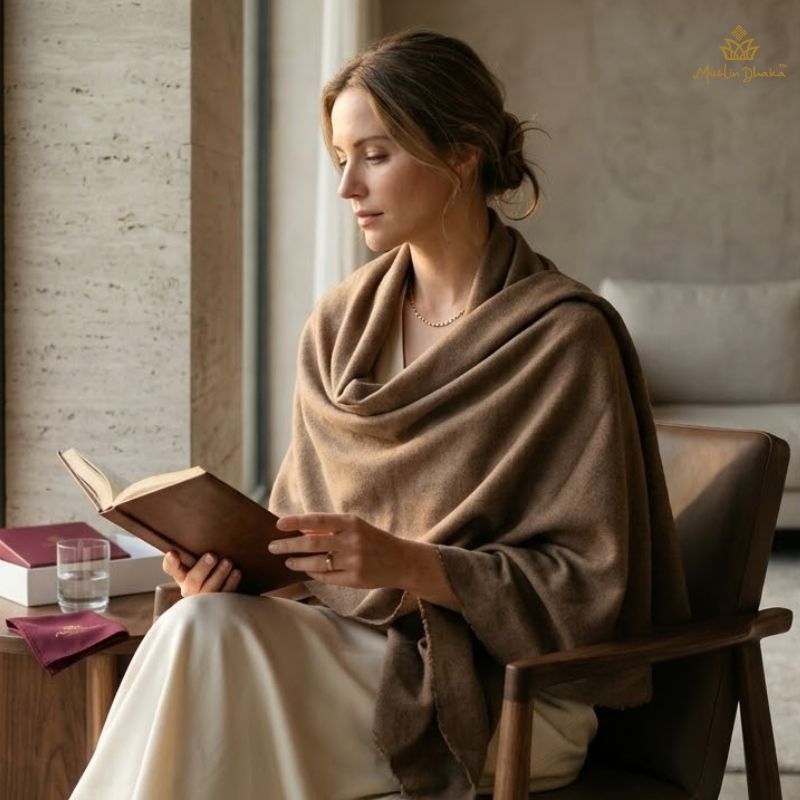
Fold it corner to corner into a triangle. Lay it over the shoulders with the point at the back and let the ends fall in front, or tie them loosely at the chest.
Folded smaller, it wraps the neck like a scarf. Opened flat, it covers the lap on a cold flight.
The color is the natural fawn of the fiber. Nothing is dyed. It sits well with any natural color.
The edge
The edge is finished by hand, not by machine, so it is slightly uneven.
How many exist
Only one Signature Shawl was woven in 2026.
Specifications
| Fiber | 100% Cervelt |
| Fiber source | Douglas Creek, New Zealand |
| Fiber fineness | 13 microns |
| Yarn count | Nm 40 |
| Weave | Plain weave, handwoven on a pit loom |
| Woven in | Dhaka, Bangladesh |
| Dimensions | 39 × 39 in (100 × 100 cm) |
| Weight | About 128 to 140 grams |
| Color | Natural undyed fawn |
| Edge | Hand finished |
| Blend | None |
| Made in 2026 | 1 piece |
Care
Hand wash in cold water with a wool detergent. Do not soak or wring. Roll in a towel and dry flat, away from direct sun. Do not hang while wet. Airing is usually enough between wears.
What ships with it
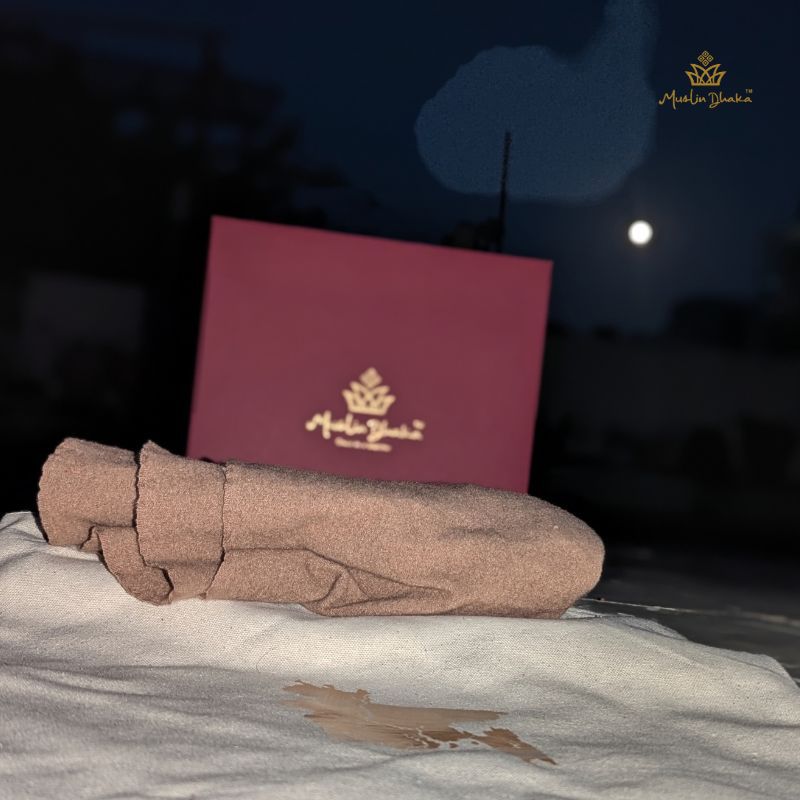
Numbered certificate of authenticity, care card, presentation box.
Acquisition
Request to Own. Send a request and we reply by message or video call. Your piece is then prepared and shipped.
Twice the length: the Cervelt Grand Shawl. For the neck: the Cervelt scarf. Why Cervelt replaced the banned shawl: shahtoosh.
Frequently asked questions
What is Cervelt?
Cervelt is the winter down of the New Zealand red deer. It measures 13 microns, finer than the finest cashmere. One deer gives about 20 grams a year.
How do I wear a square shawl?
Fold it corner to corner into a triangle and lay it over the shoulders with the point at the back. Folded smaller, it wraps the neck like a scarf.
What is the difference between the Signature Shawl and the Grand Shawl?
Both are woven on our widest loom. The Signature Shawl is 39 × 39 inches. The Grand Shawl is woven twice the length, 78 × 39 inches.
Is any animal killed to make Cervelt?
No. No animal is killed for Cervelt. The down is a by-product of New Zealand deer farming.
How do I buy it?
Every piece is sold direct. Use Request to Own, and we reply by message or video call. It ships with a numbered certificate of authenticity, a care card and a presentation box.
Disclaimer: The images are artistic impression only. The real life product could differ due to screen view & other reasons. The size might be more or less due to hand weaving, finishing and shrinking percentage.


